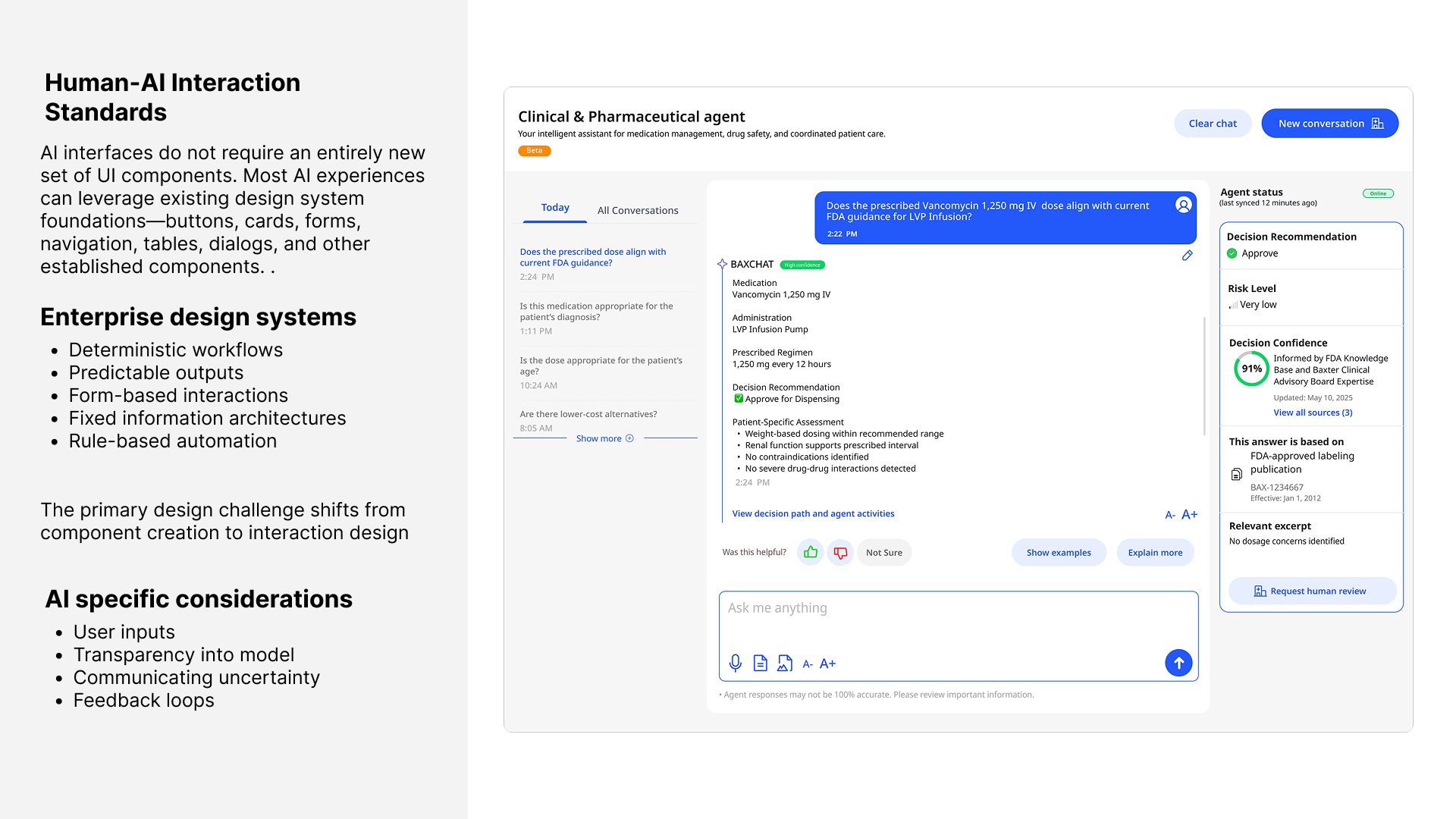
Design System Ideation Workshop
The design system team lacked a comprehensive view of user pain points, workarounds, and unmet needs. This workshop created a structured forum for gathering qualitative insights and aligning on priorities across product teams.
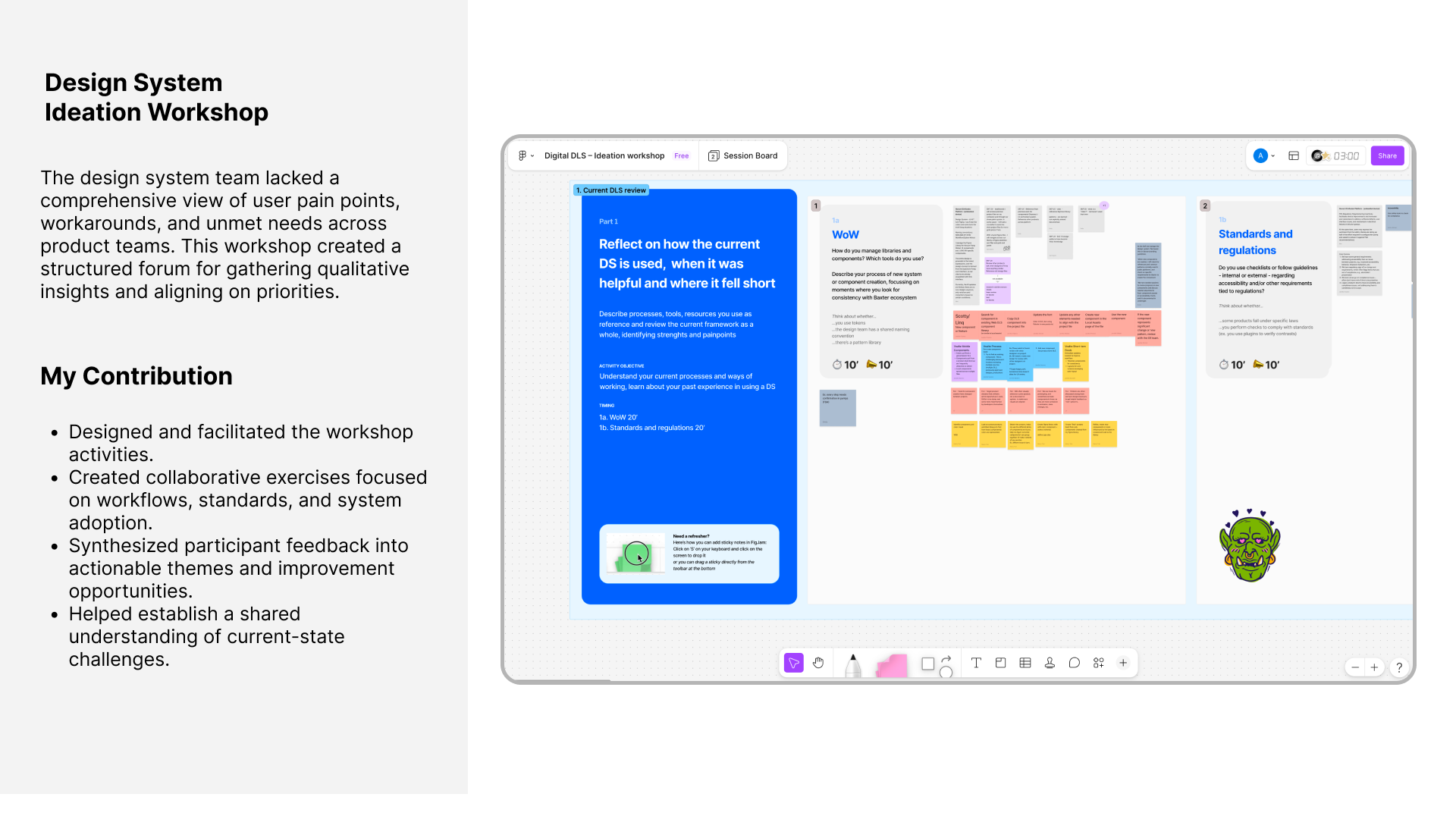
Future Design System Vision Workshop
To establish a shared vision for the next generation of the design system by gathering expectations, requirements, and success criteria directly from the people who use it.
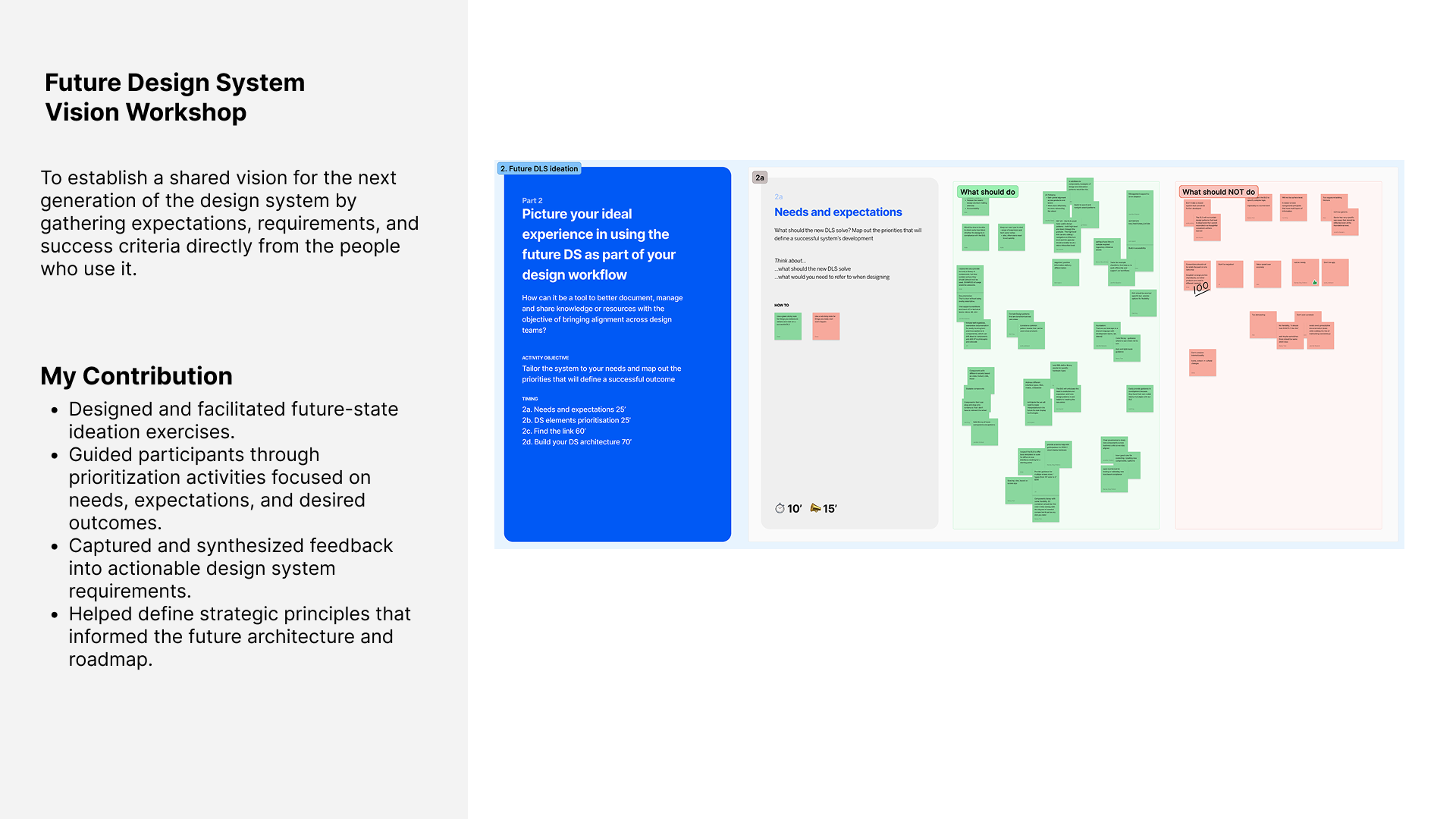
Design System Element Prioritization
To align stakeholders on the most important design system elements and ensure roadmap decisions reflected real user needs rather than assumptions — using a FigJam voting exercise across 30+ elements.
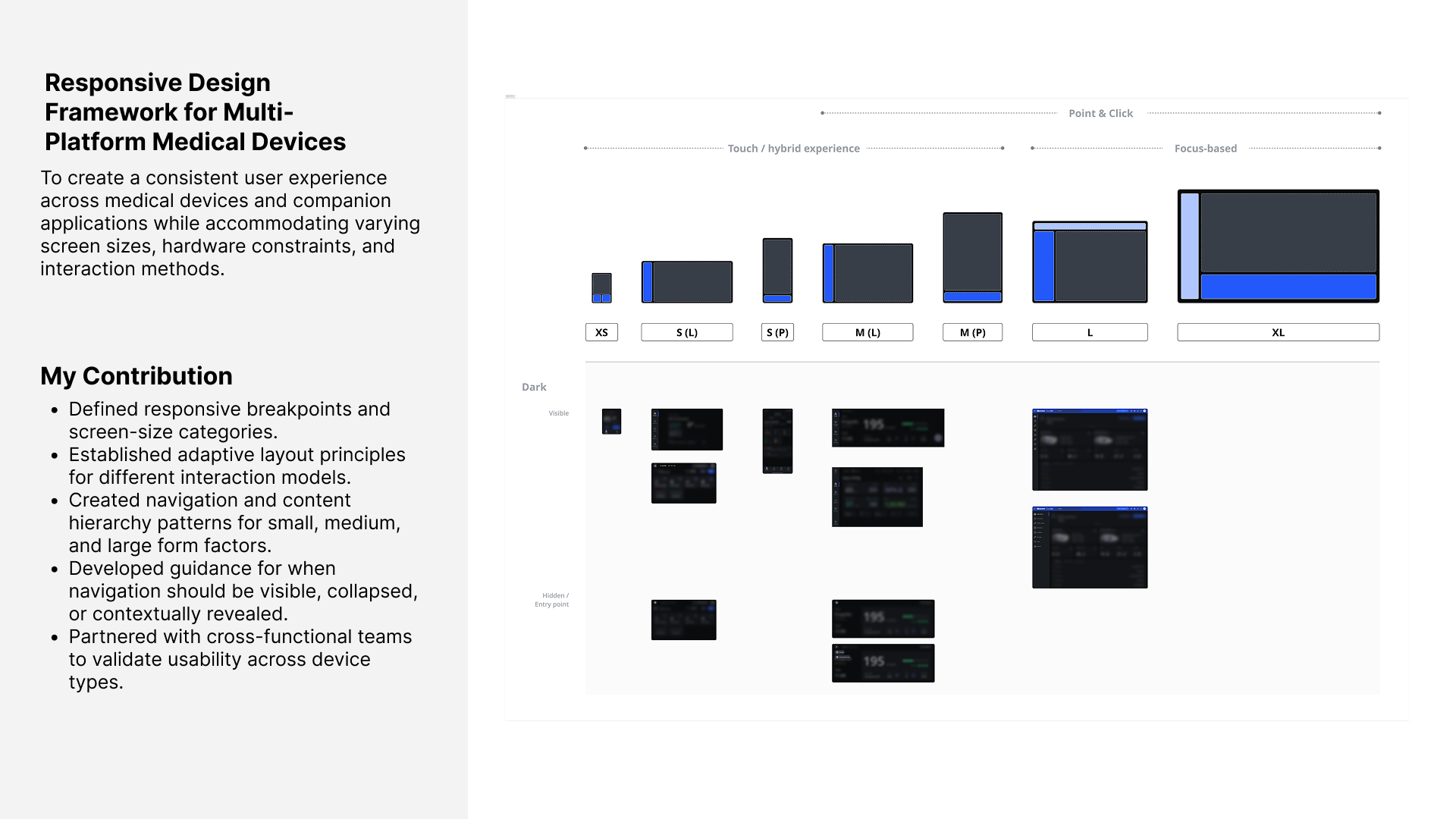
Responsive Design Framework for Multi-Platform Medical Devices
To create a consistent user experience across medical devices and companion applications while accommodating varying screen sizes, hardware constraints, and interaction methods — XS through XL across touch, point-and-click, and focus-based paradigms.
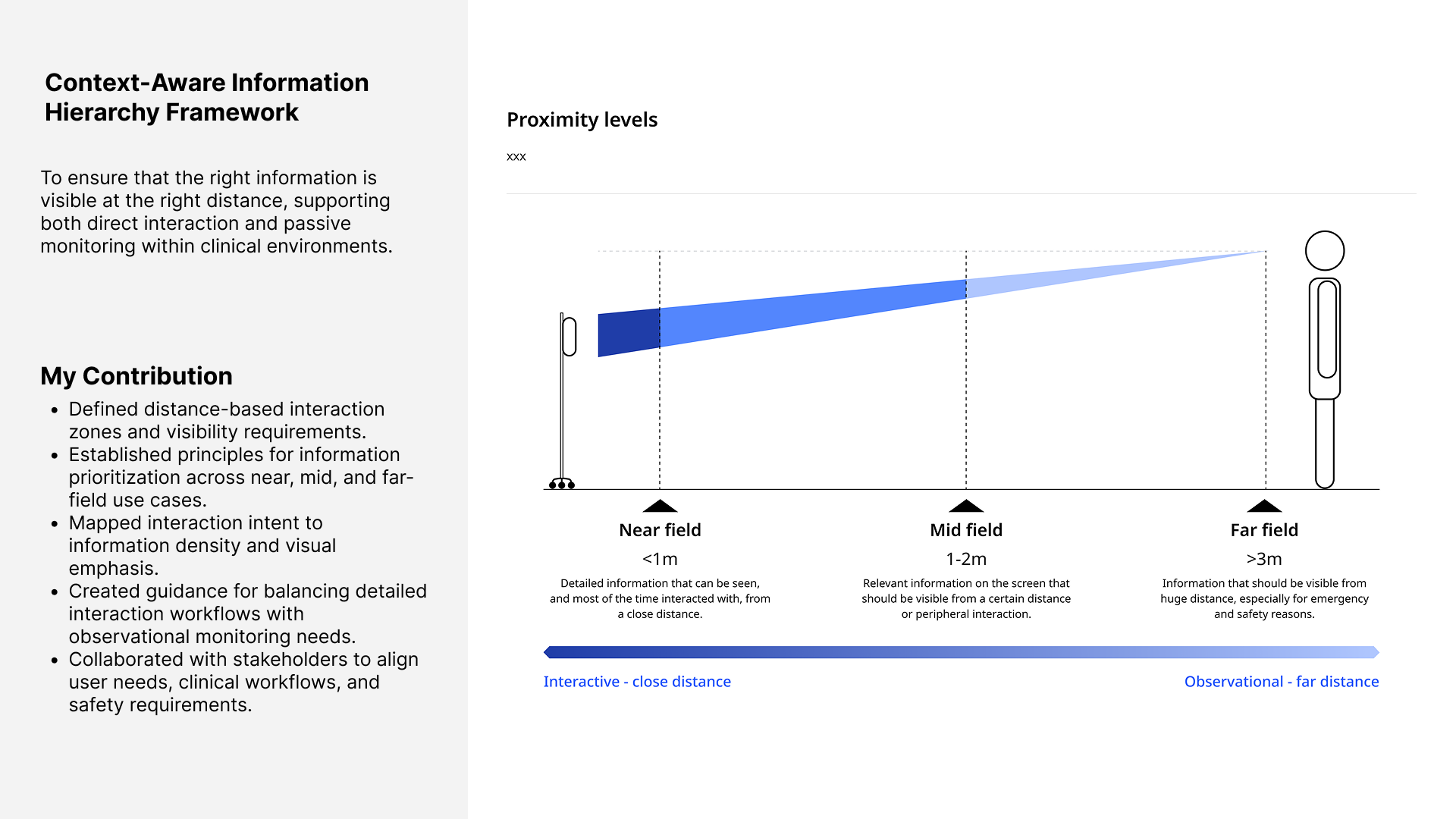
Context-Aware Information Hierarchy Framework
To ensure the right information is visible at the right distance — near field (<1m), mid field (1–2m), far field (>3m) — supporting both direct interaction and passive monitoring within clinical environments.
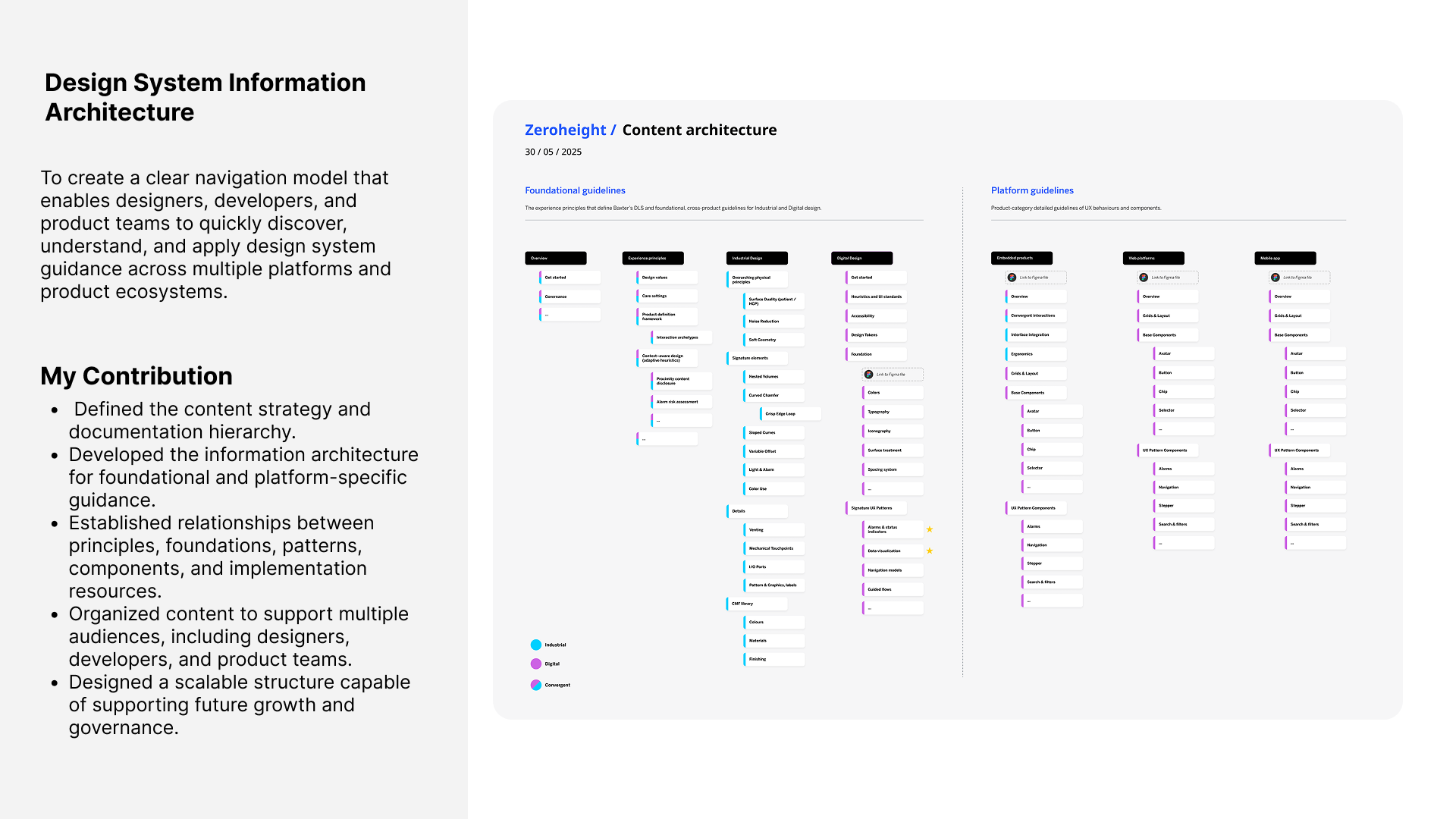
Design System Information Architecture
To create a clear navigation model in Zeroheight enabling designers, developers, and product teams to quickly discover, understand, and apply design system guidance across multiple platforms and product ecosystems.
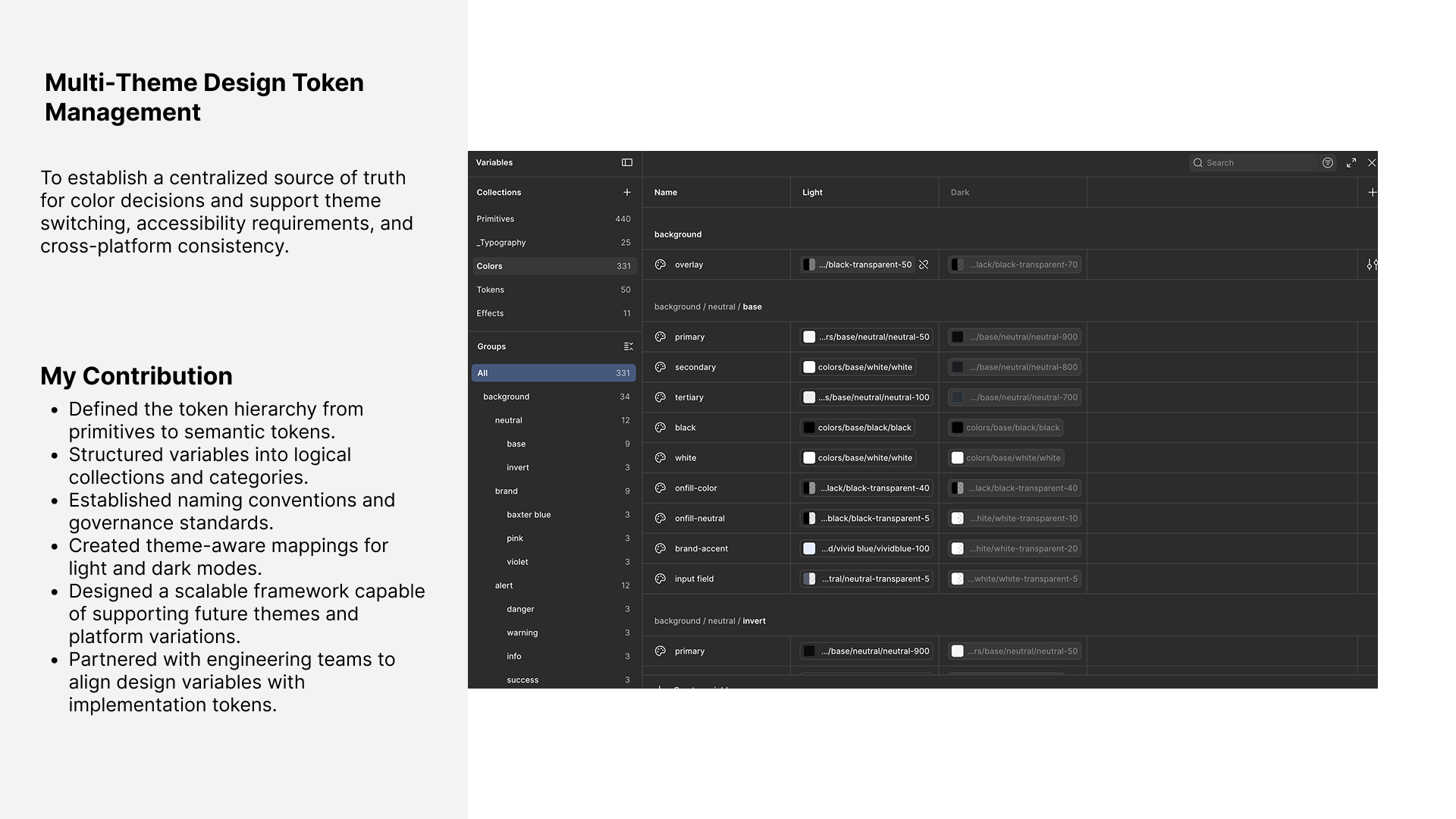
Multi-Theme Design Token Management
To establish a centralized source of truth for color decisions and support theme switching, accessibility requirements, and cross-platform consistency — 331 tokens structured from primitives to semantic decisions with light/dark mappings.
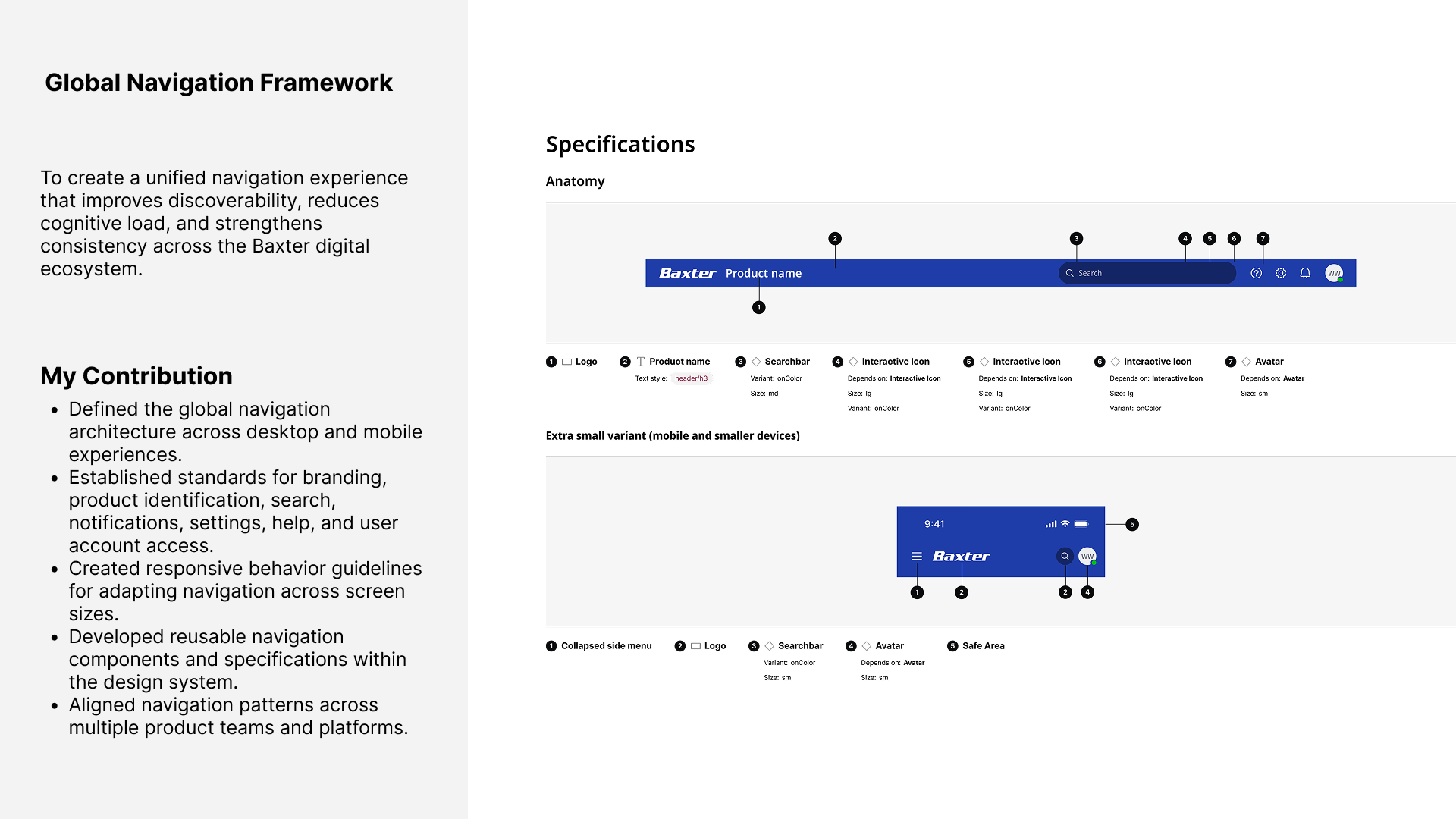
Global Navigation Framework
To create a unified navigation experience that improves discoverability, reduces cognitive load, and strengthens consistency across the Baxter digital ecosystem — standardizing branding, search, notifications, and user account from desktop to mobile.
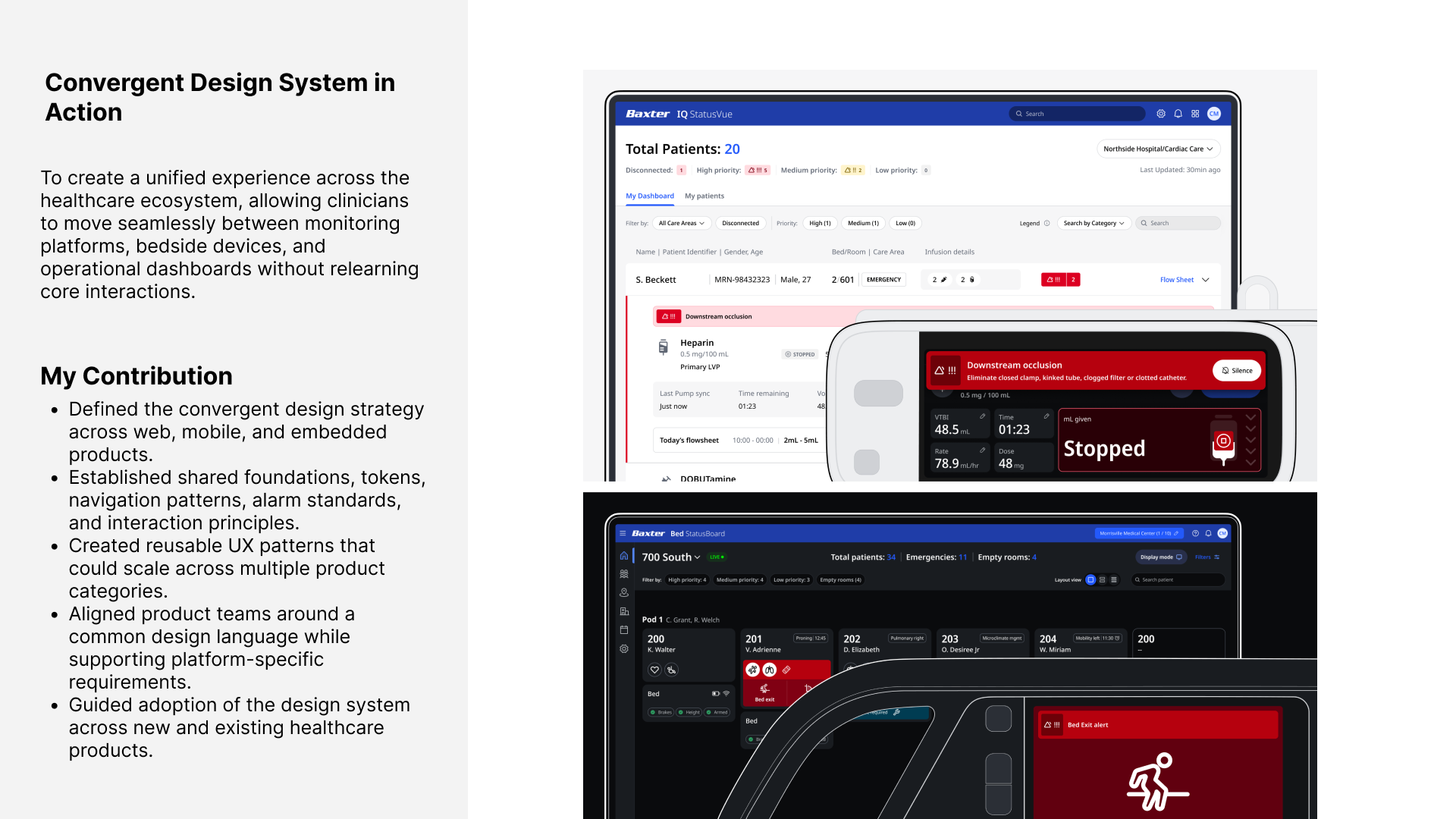
Convergent Design System in Action
To create a unified experience across the healthcare ecosystem, allowing clinicians to move seamlessly between monitoring platforms, bedside devices, and operational dashboards — IQ StatusVue, Bed StatusBoard — without relearning core interactions.
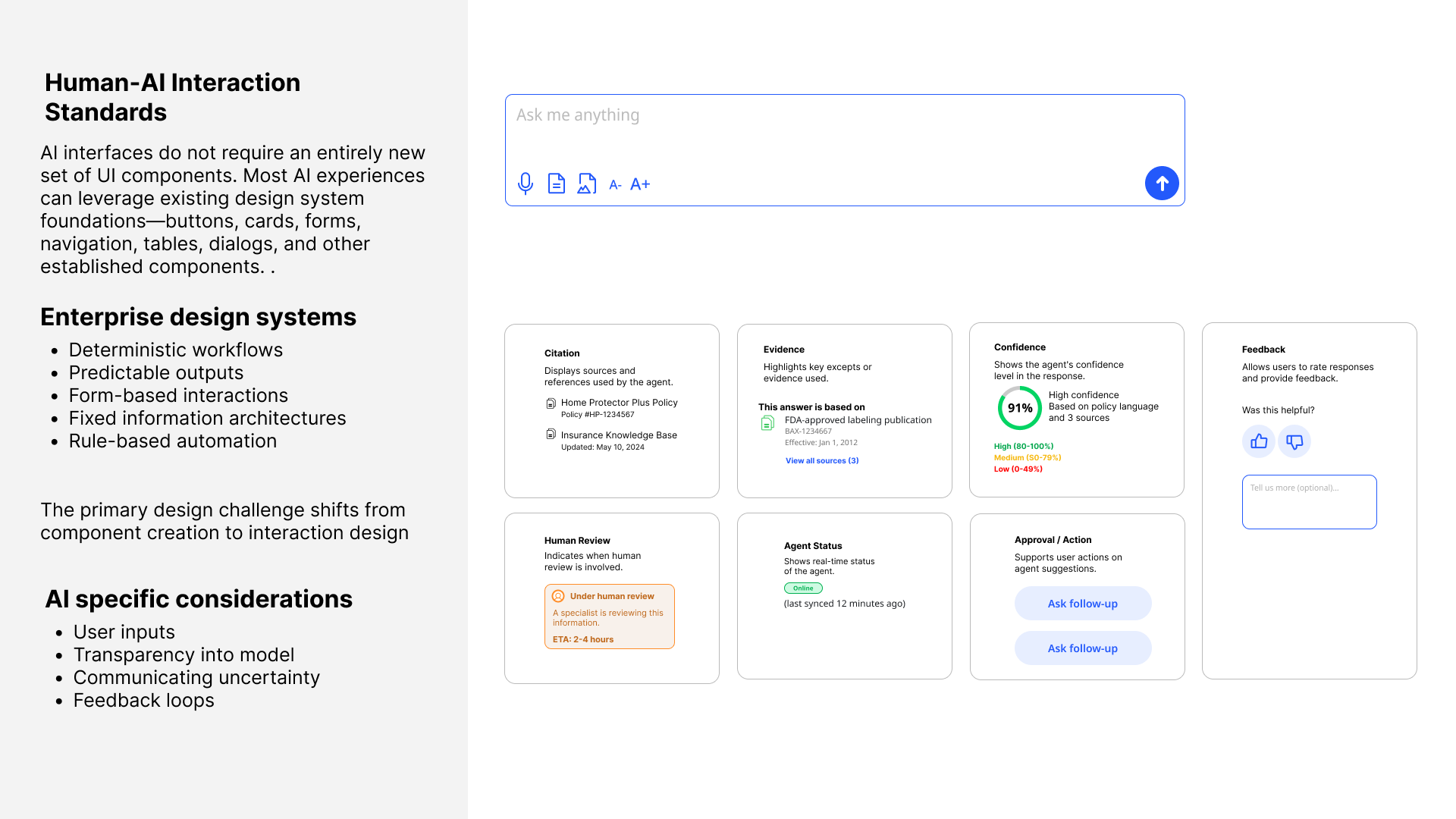
Human-AI Interaction Standards — Component Patterns
AI interfaces can leverage existing design system foundations. Six reusable patterns — citation, evidence, confidence, human review, agent status, and approval — each solving a distinct trust and transparency problem without inventing new UI paradigms.
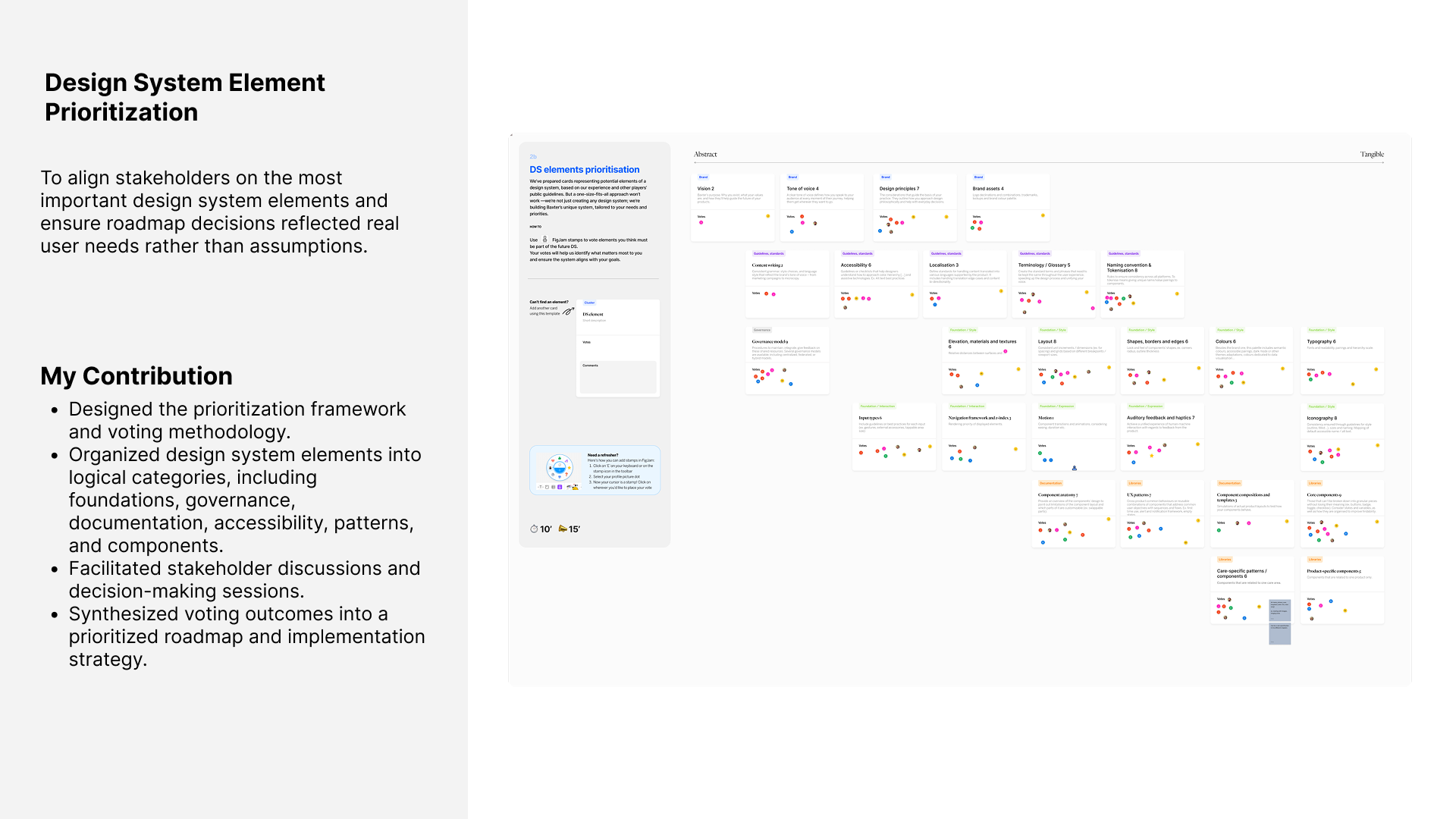
Human-AI Interaction Standards — Clinical Agent Interface
The BAXCHAT clinical and pharmaceutical agent in action — medication management, drug safety, and coordinated patient care with 91% decision confidence, FDA citations, and a human review escalation path built on existing design system components.